
August 10 // 7:20PM
Stovepipe Wells // California
It was egregiously hot, but I knew that going to Death Valley in August would be. After landing 6 hours earlier in Nevada, I was headed for the White Mountains, adjacent to the Eastern Sierra range.
With the largest wildfire in California’s history burning away hundreds of thousands of acres, the smoke had made it’s way across the entire country. Almost every state had reports of smokey or hazy air. This was heavy on my mind when I decided to head to the desert. The goal was to make some image at night, which require a clear, pristine sky for which to see the faint stars. I thought about the images I wouldn’t get, and it tormented me.
Looking across the desert landscape from the air wasn’t reassuring. The smokey haze was apparent, and I knew it would keep me from making many of kinds of images I wanted to make.
When I head to the Sierras, I almost always stop in Death Valley first. It’s on the way, and after a morning of travel it’s usually as far as I can get before nightfall. It’s also a good place for a test run with my gear.
When travelling, gear gets disassembled and spread across several bags, based on where it will best travel. When you get where you’re going, it’s always best to do a test run before hiking out, or trying to make images at key times, like sunset.
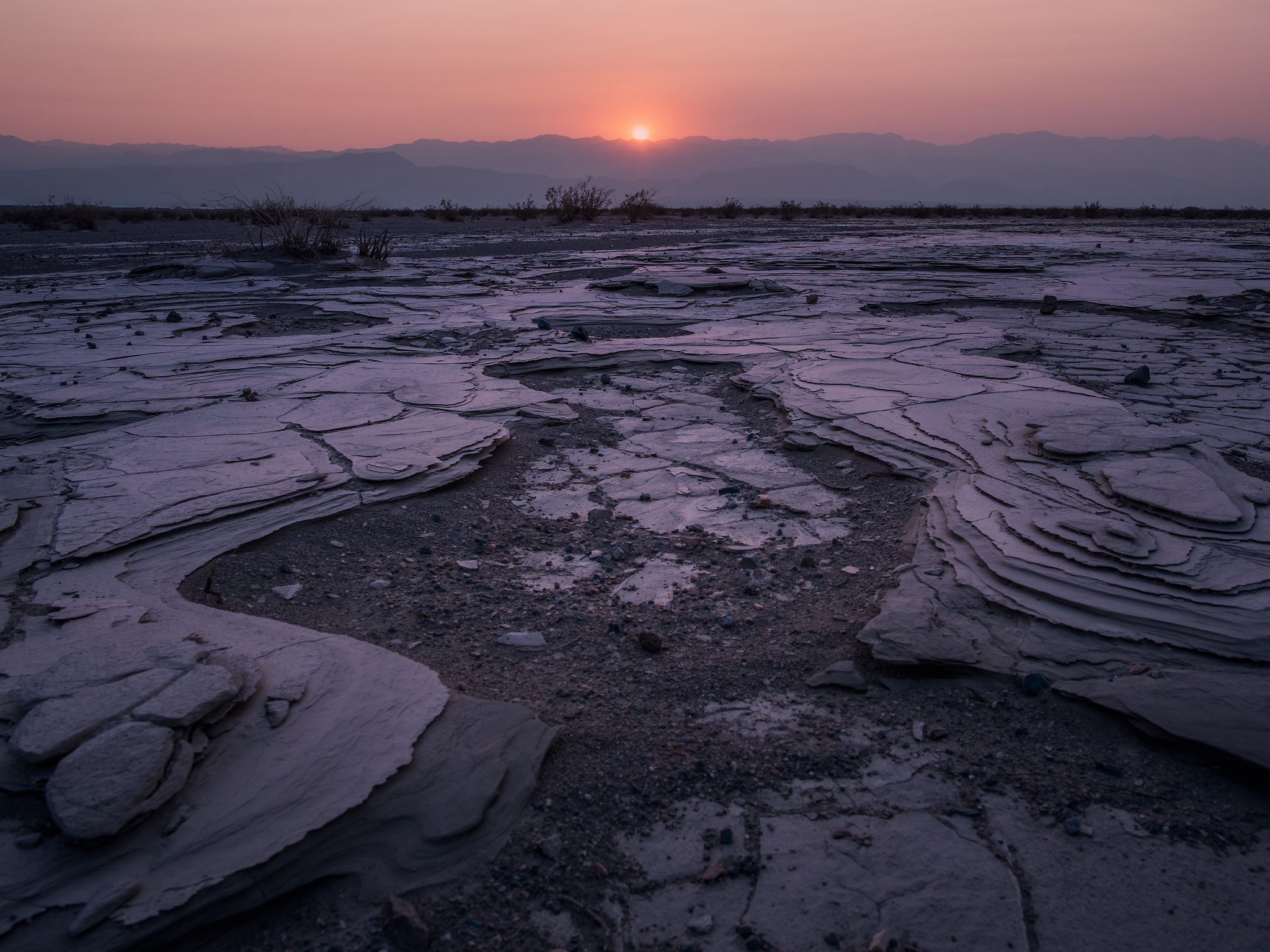
It was 123 degrees in the bottom of the valley, so I waited as late as I could before scouting the south side of the dunes for a subject to shoot at night. I then headed north, up the road to an area of dried mud flats that would work well with the sunset. From there, an image could be shot of the edge of the dunes as the last rays hit, or I could shoot into the sun as it dropped over the mountains with the mud flats in the foreground. I chose the latter.
Maybe I was distracted by my worried thoughts of the hazy air I was seeing around me, or perhaps I was just being irresponsible. I hadn’t yet set up my gear. I raced to get everything together, then hiked into the flats. When I arrived, I found a decent leading line into the sun, but then I fumbled with filters and lenses, with grips and cards, triggers and tripod, to try to get set up before the sun was gone. It was an atrociously amateur feeling. From the outside, it must have looked like I had never used any of this gear before. I hurriedly tweaked and prepped to try to catch the shot I wanted.
I snapped an image. Then, it was gone. I got one frame before the little orange disc was gone.
The irony is that the very haze that gave my stomach knots for weeks, was the very reason this image worked. The soft light and layering of this scene couldn’t have happened without a soft fog in the air.